
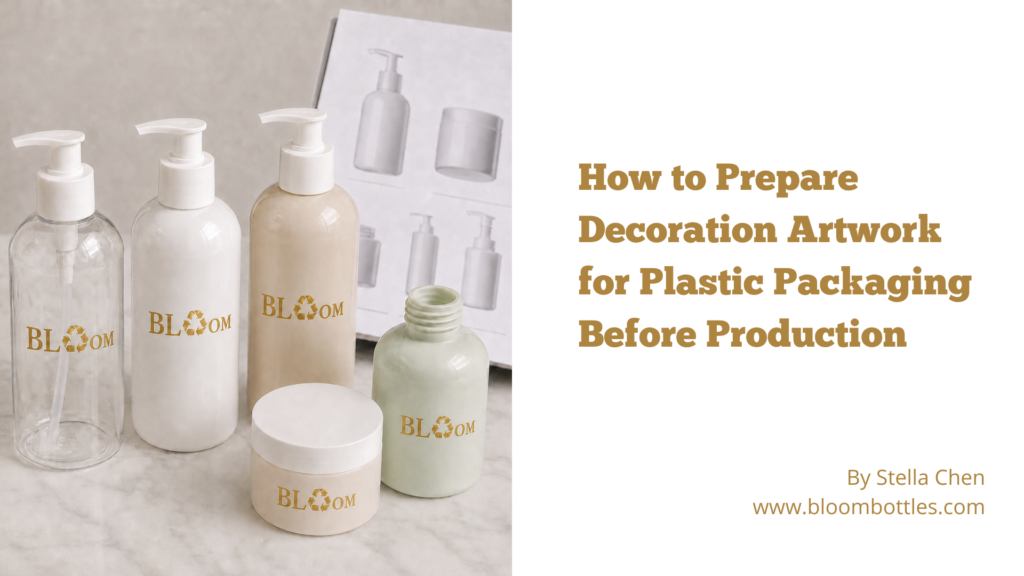
A skincare brand may approve the bottle, closure and plastic packaging decoration direction early in the project. But when the supplier starts checking the artwork file, small missing details can still delay sampling or mass production.
Decoration is not only a visual step. It affects printing feasibility, logo position, color control, surface finish, labeling area, production speed and repeat-order consistency.
For skincare, personal care and selected nutraceutical packaging projects, decoration artwork should be reviewed before production starts. If the file is unclear, the supplier may need extra confirmation, new samples or adjusted artwork before the order can move forward.
Why Plastic Packaging Decoration Artwork Matters
Plastic packaging decoration can include silk screen printing, hot stamping, heat transfer, labeling, coating, frosting or a combination of several processes. Each method has its own technical limits.
A logo that looks good on a flat digital file may not fit well on a round bottle. A label that looks clean on a design mockup may wrinkle if the bottle has a curved shoulder or limited label area. A hot stamping design may need adjustment if the surface is too small or too uneven.
This is why decoration artwork should be reviewed together with bottle shape, material, surface finish and approved color. If the packaging color is still under review, brands should also check plastic packaging color approval before locking the decoration file.
What Brands Should Confirm Before Sending Artwork
Before sending artwork to the supplier, the brand should confirm what type of decoration is required and where it will be applied. A beautiful artwork file is not always a production-ready file.
- Final bottle, jar or closure shape
- Confirmed capacity and mold version
- Decoration method, such as printing, hot stamping or labeling
- Printable area or label area
- Logo size and position
- Artwork color references
- Surface finish, such as glossy, matte, frosted or coated
- Front and back orientation
- Barcode, warning text or regulatory information if required
- Approval standard for samples and production
These details should not stay only in emails. They should be recorded in a clear plastic packaging specification sheet so the supplier, brand team and contract manufacturer can work from the same file.
Use Vector Files Whenever Possible
For printing and hot stamping, vector files are usually preferred. They help keep logos, lines and text clean when the artwork is adjusted to fit the packaging surface.
Common file formats may include AI, PDF, EPS or other editable design files. If the brand only provides a low-resolution image, the supplier may not be able to prepare a clear printing plate or production layout.
Before sampling, the brand should make sure all fonts are outlined or included, logos are clear, and the artwork is not only a screenshot or preview image.
Confirm the Decoration Area on the Real Packaging
The decoration area depends on the real bottle or jar shape. A round bottle, oval bottle, square bottle, thick-wall PETG bottle or double-wall PP jar will not have the same decoration limits.
For curved bottles, the printing area may be smaller than expected. For jars, the lid and base may need separate decoration files. For pumps or closures, the decoration surface may be too small for detailed logos.
If the supplier provides a 2D layout or decoration drawing, the brand should check logo position, text direction, front view, back view and any alignment requirements before approving the file.
Check Artwork Color Against the Packaging Base
Artwork color should be checked on the final or closest packaging base. A logo may look different on clear PET, white PP, frosted PETG, colored HDPE or PCR material.
Light print may not show clearly on a pale bottle. Dark print may look too heavy on small packaging. Metallic hot stamping may look different on matte and glossy surfaces.
If the project uses labels, the brand should also check whether the label material works with the bottle shape, surface finish and product environment. A clear label, matte label or metallic label can all change the final shelf appearance.
Review Decoration Samples Before Mass Production
Decoration samples are useful because they show what the artwork looks like on the real packaging. This is different from reviewing a flat design file on screen.
The sample should be checked for logo position, print sharpness, color match, surface adhesion, label alignment and overall appearance after assembly.
Even when the packaging sample has been approved, decoration still needs a practical review. This follows the same logic as checking approved packaging samples before production.
Common Decoration Artwork Problems
Many decoration problems happen before production because the artwork file is not ready for the real packaging process. These issues are common in B2B skincare and personal care packaging projects.
- The supplier receives only a JPG or screenshot instead of an editable file
- The logo is too large for the printable area
- Small text becomes unclear after printing
- The artwork is designed for a flat surface but the bottle is curved
- The label size does not match the real label area
- The hot stamping area is too close to the bottle shoulder or edge
- The print color does not stand out on the final packaging color
- The front and back directions are not clearly marked
- The approved sample and production artwork are not the same version
When these points are discovered late, the project may need new artwork, new samples or extra approval time. This can become one of the reasons for plastic packaging production delays.
Practical Checklist for Decoration Artwork Readiness
Before approving decoration for mass production, brands and contract manufacturers can use this checklist to reduce avoidable mistakes.
- Has the final packaging shape and mold version been confirmed?
- Has the decoration method been selected?
- Is the artwork file editable and high quality?
- Are all fonts outlined or included?
- Is the logo size suitable for the real decoration area?
- Are front, back and orientation clearly marked?
- Are artwork colors confirmed against the packaging base color?
- Has the label size been checked against the real bottle or jar?
- Has the decoration sample been reviewed and approved?
- Is the approved artwork version recorded for repeat orders?
Decoration Control for Repeat Orders
Repeat orders can still face decoration problems if the approved artwork version is not controlled. A small change in logo file, print color, label material or bottle surface can create a visible difference.
For repeat orders, the supplier should check the previous approved artwork, production sample, print file and decoration process. The brand should also confirm whether any design update has been made since the last order.
If the packaging base color, material or surface finish changes, the decoration should be reviewed again. The same artwork may not look the same on a different packaging base.
Keeping clear records helps support better packaging consistency across repeat orders and reduces approval confusion between brand teams, suppliers and contract manufacturers.
How Suppliers Can Support Artwork Review
A practical supplier should not only receive the artwork and move directly to production. The supplier should check whether the file can work with the selected packaging and decoration process.
Useful supplier-side support may include reviewing the printable area, checking whether small text can be printed clearly, confirming label size, suggesting artwork adjustment and keeping approved samples for future orders.
This kind of early review helps the brand avoid problems that are hard to fix after production has already started.
Final Thought
Plastic packaging decoration should be prepared as part of the production plan, not as a last step after the package is selected.
A clear artwork file, confirmed decoration area and approved physical sample help reduce printing mistakes, approval delays and repeat-order differences.
For skincare and personal care packaging projects, good decoration preparation makes the project easier to control from sampling to mass production and future repeat orders.
FAQ
What file format is best for plastic packaging decoration artwork?
Editable vector files are usually preferred, such as AI, PDF or EPS files. They help keep logos, text and lines clear when the artwork is adjusted for printing or hot stamping.
Can a brand approve decoration using only a digital mockup?
A digital mockup is useful for early review, but it should not be the only approval standard. A physical decoration sample is safer before mass production.
Why does artwork look different on the real bottle?
The real bottle may have curves, shoulders, surface texture, color or gloss that affects the final appearance. Decoration should be reviewed on the actual or closest packaging sample.
How can brands avoid decoration changes in repeat orders?
Brands should keep the approved artwork version, decoration sample and production records. Any change in bottle color, material, label material or printing process should be reviewed before the repeat order starts.