
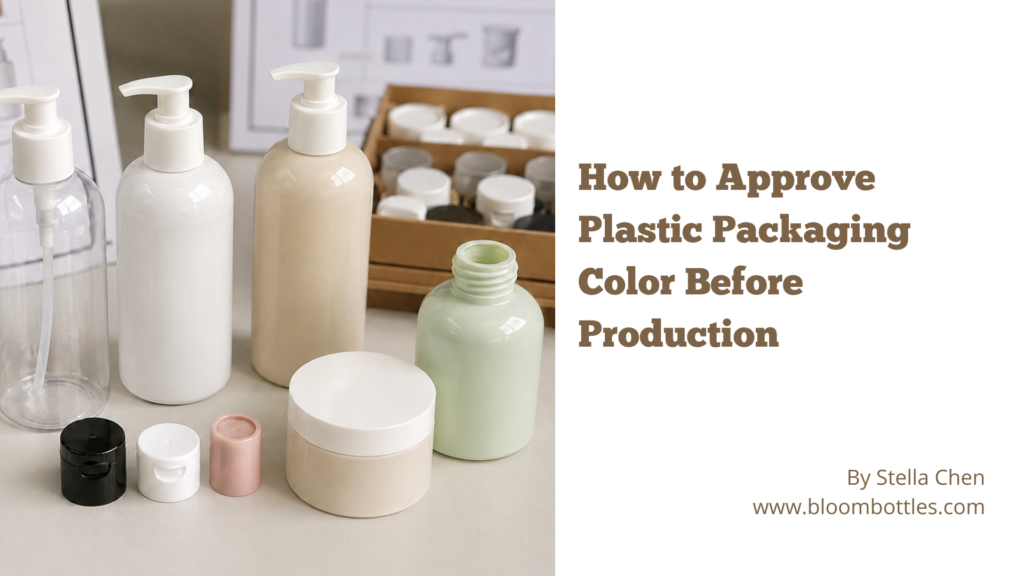
Color approval often looks simple at the beginning of a packaging project. A brand sends a reference color, the supplier prepares a sample, and everyone expects the production color to follow the same direction.
But in plastic packaging color approval, the final result can be affected by material, bottle thickness, surface finish, lighting, decoration method and even the product filled inside the package.
For skincare, personal care and selected nutraceutical packaging projects, color should be confirmed as part of the production standard, not only as a visual preference.
Why Plastic Packaging Color Approval Matters
Plastic packaging color can look different depending on material, bottle thickness, mold structure and lighting. The same color target may appear different on PET, HDPE, PP or PETG packaging.
For example, a soft white color may look clean on a thick PP jar but slightly translucent on a thin PET bottle. A pastel color may look stable on an opaque HDPE bottle but less even on a transparent PET bottle if the color target is not reviewed properly.
This is why material choice should be reviewed together with color expectations. If a brand is still deciding between different resins, it is helpful to review PET vs HDPE vs PP skincare packaging before locking the final color direction.
When color approval is rushed, the supplier, brand owner and contract manufacturer may all have a different understanding of what has been approved. This creates risk before production and makes repeat orders harder to control.
What Brands Should Confirm Before Color Matching
Before asking a supplier to match a color, the brand should provide enough details for the supplier to understand the real packaging target. A color reference alone is often not enough.
- Target packaging material, such as PET, HDPE, PP or PETG
- Final bottle or jar size and weight
- Required finish, such as glossy, matte, frosted or translucent
- Whether the color should be opaque, semi-transparent or transparent
- Closure, pump or sprayer color requirements
- Decoration method, such as silk screen printing, hot stamping, labeling or coating
- Approved reference sample, Pantone number or physical color chip
- Expected lighting condition for color review
These details should also be recorded in the project file. A clear plastic packaging specification sheet helps avoid confusion when samples, approvals and production files are shared between different teams.
Confirm the Material Before Matching the Color
Color approval should not happen separately from material approval. Different plastics absorb and reflect color differently. Bottle wall thickness, resin clarity and molding process can all affect the final look.
A color that looks strong on PP may look softer on PET. A translucent color may look different when the bottle is empty compared with when it is filled with lotion, gel or liquid product.
If the formula color is dark or tinted, the brand should test the bottle with real product or a product-like sample. This is especially useful for transparent, frosted or light-colored packaging.
Use Physical Samples Instead of Only Digital References
Digital color references are useful for communication, but they should not be the only approval standard. Screens, photos and PDF files can show the same color differently.
For production approval, a physical sample is much safer. This can be a molded bottle sample, a resin color chip, an approved masterbatch sample or a previous production sample if the brand is placing a repeat order.
The approved sample should be clearly labeled and kept by both the brand and supplier. It becomes the reference for production inspection and future repeat orders.
Review Bottle, Cap and Pump Colors Together
Many packaging issues happen because each component is approved separately. The bottle may look correct by itself, but the full set may not look balanced when the cap, pump, sprayer or overcap is assembled.
This is common when different components are made with different materials. A PET bottle, PP closure and plastic pump actuator may not show the same white, black or pastel shade even when the same color target is used.
Before mass production, brands should review the full packaging set as one system. This includes the bottle, closure, pump, sprayer, liner, overcap and decoration if applicable.
Check Decoration on the Final Color Base
Decoration results can change depending on the base color of the packaging. Silk screen printing, hot stamping and labels may look different on white, clear, frosted, colored or dark packaging.
For example, a light logo may not stand out enough on a pale bottle. A metallic hot stamp may look different on a matte surface than on a glossy surface. A clear label may show the product color behind it and affect the final shelf look.
The decoration artwork should be reviewed on the real or closest possible packaging color before full production. This helps reduce rework and avoids last-minute changes after the bottle color has already been approved.
Common Plastic Packaging Color Problems
Color problems are not always caused by poor production control. Many issues come from unclear approval standards before production starts.
- The approved color sample was a photo instead of a physical sample
- The brand approved the bottle color but did not approve the closure color
- The color was reviewed under different lighting conditions
- The bottle was approved empty but looked different after filling
- The decoration color was not tested on the final packaging base
- The repeat order used an old sample without checking production records
- The supplier and brand did not keep the same approved reference sample
These issues can also affect timeline. If color approval is not finished before the purchase order is confirmed, it may become one of the reasons for plastic packaging production delays.
How to Review Color Samples Before Production
Color samples should be reviewed in a practical way, not only from a branding point of view. The review should include appearance, component matching, decoration and filling compatibility.
- Review the sample under stable lighting
- Compare the sample against the approved physical reference
- Check color consistency between bottle, cap, pump and sprayer
- Fill the package with real product or a similar product when possible
- Check the sample with label, print or hot stamping if decoration is required
- Confirm whether the color is acceptable for both first orders and repeat orders
- Keep one approved sample with the brand and one with the supplier
This step should be part of the normal approval process. Even when a sample looks approved, it still needs testing before production. This is similar to the process of checking approved packaging samples before production.
Color Approval for Repeat Orders
Repeat orders need color control too. A brand may expect the new order to match the previous order exactly, but color can still vary if the approved standard is not clear.
For repeat orders, the supplier should check the previous production sample, color formula, material record and production notes. The brand should also confirm whether the packaging color needs to stay the same or if a small adjustment is acceptable.
If the project uses PCR material, recycled resin content or a changed surface finish, the repeat-order color should be reviewed more carefully. Material variation can affect color, transparency and surface appearance.
Good sample records make repeat orders easier to manage. This also supports better packaging consistency across repeat orders.
Practical Checklist for Plastic Packaging Color Approval
Before confirming mass production, brands and contract manufacturers can use this checklist to reduce color-related risk.
- Has the final packaging material been confirmed?
- Is the approved color based on a physical sample?
- Are bottle, cap, pump and sprayer colors reviewed together?
- Has the packaging been checked with the real product or a similar fill?
- Has the decoration been tested on the final color base?
- Are color tolerance and acceptable variation discussed clearly?
- Are approved samples kept by both the brand and supplier?
- Is the approved color recorded in the packaging specification sheet?
- For repeat orders, has the previous production sample been checked?
- Are any material, PCR, mold or finish changes clearly marked?
Final Thought
Plastic packaging color approval should happen before production, not after production problems appear. A clear color standard helps brands, contract manufacturers and suppliers work from the same reference.
For B2B packaging projects, color is not only a visual decision. It is part of material selection, component matching, decoration review and repeat-order control.
When color approval is handled early, the project is easier to manage from sampling to mass production and future reorder planning.
FAQ
Can a Pantone number be used for plastic packaging color approval?
Yes, a Pantone number can be a useful starting point. But for plastic packaging, a physical sample is still needed because the final color can change depending on resin, thickness, finish and molding process.
Should the bottle and closure color be approved separately?
They can be checked separately during development, but the final approval should review the full packaging set together. Different materials may show the same color target differently.
Why does packaging color look different after filling?
If the bottle is clear, frosted, light-colored or semi-transparent, the product inside can affect the final look. This is why testing with real product or a similar fill is helpful before production.
How can brands control color consistency for repeat orders?
Brands should keep approved production samples and make sure the supplier keeps the same reference. The color formula, material record, production batch and any changes should also be recorded clearly.