
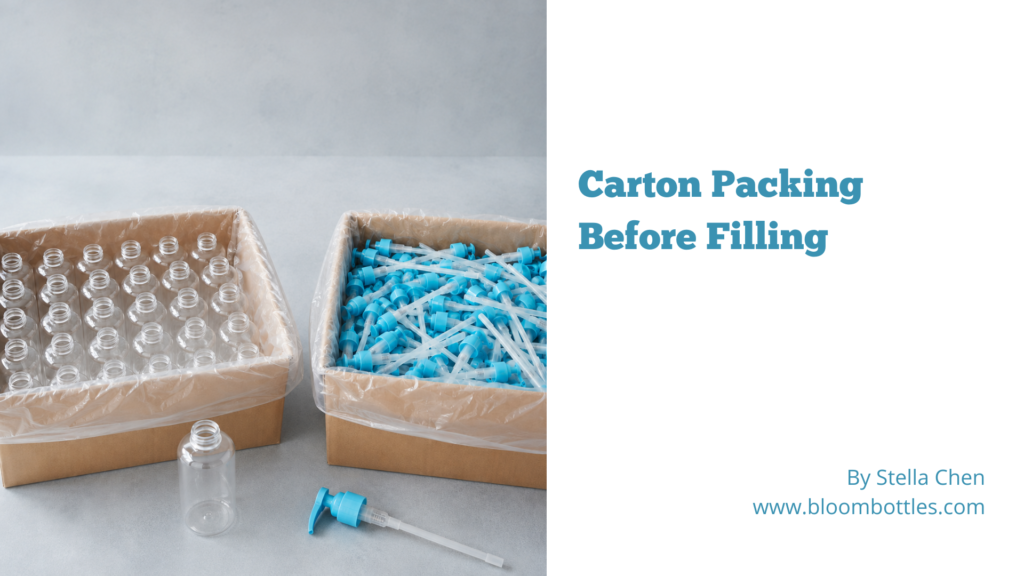
Plastic packaging carton packing is often treated as a simple shipping detail. But for skincare, personal care and selected nutraceutical projects, the way empty bottles, jars, pumps, caps and sprayers are packed can affect filling efficiency, appearance quality and repeat-order stability.
A bottle may be produced correctly. A pump may match the neck finish. A cap may pass the first fitment check. But if the components are packed without enough protection, the contract manufacturer may still receive scratched bottles, deformed caps, loose overcaps, dusty components or mixed parts.
For scale-stage projects, carton packing should not be confirmed at the very end. It should be part of the packaging discussion before mass production and shipment.
Why Carton Packing Matters for Empty Plastic Packaging Components
Empty packaging components are different from finished goods.
Before filling, bottles, jars, pumps, caps and closures are usually shipped as separate components. They may be packed by carton, inner bag, tray, divider, layer pad or pallet, depending on the product structure and order quantity.
If carton packing is not clear, several problems can appear at the filling stage. Bottles may arrive with surface scratches. Caps may rub against each other. Pumps may be mixed with different dip tube lengths. Overcaps may loosen during transit. Decorated parts may show abrasion. Cartons may be too heavy for warehouse handling.
These issues do not always mean the component was poorly made. Sometimes the production quality is acceptable, but the packing method does not protect the component well enough through handling, shipping and storage.
This is why carton packing should also be reviewed when brands use a plastic packaging supplier checklist. A supplier should be able to explain not only how the package is made, but also how it will be protected before it reaches the filler.
What Brands Should Confirm Before Carton Packing
A useful carton packing plan should be based on the component type, decoration method, filling process, shipping method and repeat-order needs. It should not rely only on standard carton quantity.
Carton packing should also be recorded in the project information before production. When brands build a plastic packaging specification sheet, packing details such as carton quantity, inner bag method, divider use and component version should be included.
Before production starts, brands and contract manufacturers should confirm the following details with the supplier.
Component Type and Surface Risk
Different packaging components need different packing protection.
A clear PET bottle may show scratches more easily than an opaque HDPE bottle. A frosted bottle may need protection against rubbing marks. A coated or decorated bottle may require more careful layer separation. A pump with a long dip tube may need different packing from a simple screw cap.
Brands should ask whether the component is sensitive to:
- Surface scratches
- Rubbing marks
- Dust contamination
- Cap deformation
- Pump head damage
- Dip tube bending
- Decoration abrasion
- Overcap loosening
This is especially important when the packaging has a premium appearance or will be used for a retail skincare line.
Bottle, Cap and Pump Packing Method
A bottle and a closure may belong to the same packaging system, but they do not always need to be packed together.
For many projects, bottles, pumps and caps are packed in separate cartons. This helps reduce rubbing, avoids unnecessary assembly before filling and allows the contract manufacturer to manage components according to the filling line process.
However, separate packing also requires clear carton marks and component matching records. If the filler receives several similar caps or pumps, small differences in neck size, dip tube length or color can create confusion.
This is why carton packing should connect with the full bottle and closure system for skincare packaging. The supplier should confirm which components are packed separately, which are pre-assembled and which need special handling.
Inner Bag, Divider, Tray or Layer Pad
Outer cartons alone may not be enough. Many plastic packaging components need inner protection.
Depending on the product, the supplier may use polybags, layer pads, paper dividers, trays or custom inserts. The purpose is not to make the packing look better. The purpose is to reduce movement inside the carton.
Common options include:
- Inner bags to keep components clean
- Layer pads to reduce bottle-to-bottle rubbing
- Dividers for decorated or scratch-sensitive bottles
- Trays for special shapes or unstable components
- Separate bags for pumps, sprayers or caps
- Carton liners for dust protection during long-distance shipping
The right method depends on component value, surface finish, decoration requirement and shipping distance.
Carton Quantity and Carton Weight
Carton quantity is not only a packing number. It affects warehouse handling, carton strength, shipping cost and filling line preparation.
If too many bottles are packed in one carton, the carton may become heavy or the lower layers may receive too much pressure. If too few components are packed in one carton, the shipment may use more cartons than necessary and increase warehouse handling work.
Brands should confirm:
- Pieces per carton
- Gross weight per carton
- Carton dimensions
- Number of layers inside the carton
- Whether the carton can be handled safely by warehouse teams
- Whether carton quantity matches filling line batch planning
- Whether carton quantity should remain the same for repeat orders
For scale-stage projects, carton quantity should be recorded. If it changes from one order to the next, the customer and filler should know before shipment.
Decoration and Surface Protection
Decoration makes carton packing more sensitive.
Silk screen printing, hot stamping, frosting, coating and labeling may require different protection during packing. A bottle may pass decoration inspection at the factory, but still arrive with rubbing marks if decorated surfaces contact each other inside the carton.
Brands should ask the supplier how decorated components will be separated, layered and inspected before packing.
For premium packaging, it may be necessary to use layer pads, dividers or adjusted carton quantity. This can add packing cost, but it may reduce the risk of receiving visually unacceptable components at the filling facility.
Transit and Leakage Risk
Carton packing also connects with transit risk.
For empty components, leakage is usually not the main issue before filling. But poor packing can still affect future leakage performance if bottle necks, threads, liners, caps or pump structures are damaged during transport.
If the packaging system is already sensitive to sealing or torque control, brands should also review why plastic packaging leaks during shipping. Even though that topic is often discussed after filling, the protection of empty components before filling can also affect final packaging performance.
Sampling and Packing Confirmation
Carton packing should be confirmed before mass shipment, not guessed after the order is ready.
For new packaging projects, brands can ask for packing photos, carton specifications or a simple packing description during the sample approval stage. For high-value or scratch-sensitive components, a packing test may also be useful.
This connects with the broader idea that approved packaging samples still need testing before production. The approved sample should not only look correct. The packing method should also be practical for shipment, storage and filling.
Some brands and contract manufacturers also refer to transport testing resources from the International Safe Transit Association when building internal packaging test requirements.
Common Problems Caused by Poor Carton Packing
Poor carton packing may not be obvious when the goods leave the factory. The problem often appears when the contract manufacturer opens the cartons before filling.
Common problems include:
- Scratched clear bottles
- Rubbing marks on frosted or coated bottles
- Loose overcaps on pumps or sprayers
- Mixed caps or pumps from different versions
- Bent dip tubes
- Deformed caps from pressure inside the carton
- Dust or debris inside poorly protected cartons
- Decorated surfaces damaged during movement
- Cartons that are too heavy for handling
- Changed carton quantity from repeat orders without notice
These problems can slow down filling, increase sorting work and create extra communication between the brand, contract manufacturer and supplier.
Why Repeat-Order Carton Packing Should Be Recorded
Carton packing is also part of repeat-order control.
If the first order uses one packing method and the next order uses another, the customer may notice differences in warehouse handling, filling preparation or component condition. Even if the product itself has not changed, the packing change can create questions.
For repeat orders, brands should ask the supplier to keep records of:
- Carton quantity
- Carton dimensions
- Inner bag method
- Layer pad or divider use
- Packing sequence
- Shipping marks
- Component version packed in each carton
- Any changes from the previous shipment
This is closely connected to packaging consistency across repeat orders. Consistency is not only about color, decoration and material. It also includes packing records that help future orders stay controlled.
Practical Carton Packing Checklist
Before shipping empty plastic packaging components, brands and contract manufacturers can use this checklist to confirm the main packing details with the supplier.
- Are bottles, jars, pumps, caps and sprayers packed separately or assembled?
- Are component versions clearly marked on each carton?
- Is the carton quantity confirmed before production?
- Is the gross weight suitable for warehouse handling?
- Do clear, frosted or decorated parts need layer pads or dividers?
- Are pumps and sprayers protected from overcap loosening or dip tube bending?
- Are caps protected from deformation or surface rubbing?
- Are inner bags or carton liners needed for dust protection?
- Are carton marks clear for the contract manufacturer?
- Are packing photos or packing records available before shipment?
- Will the same packing method be used for repeat orders?
- How will packing changes be communicated and approved?
This checklist does not make the project more complicated. It helps prevent avoidable problems before the components reach the filling line.
For brands preparing to move from samples to larger orders, carton packing should be reviewed together with other production-readiness details. This is part of how teams evaluate plastic packaging before they scale.
Final Thought
Plastic packaging carton packing is not only a warehouse detail. It is part of production readiness.
For scale-stage beauty and personal care projects, the supplier should know how to protect each component before filling. A clear packing method can reduce scratches, mixing errors, deformation, filling delays and repeat-order confusion.
The best time to discuss carton packing is before mass production and shipment, not after the contract manufacturer opens the cartons.
When carton packing is clear, the full packaging project becomes easier to manage from supplier production to filling line preparation.
FAQ
Why is carton packing important for empty plastic packaging components?
Carton packing protects empty bottles, jars, pumps, caps and sprayers before filling. Poor packing can cause scratches, deformation, mixed components, loose overcaps or extra sorting work at the contract manufacturer.
Should bottles and pumps be packed together or separately?
It depends on the project. Many bottles and pumps are packed separately to reduce rubbing and support filling line assembly. If they are packed separately, carton marks and component matching records should be clear.
What should be recorded for repeat-order carton packing?
Brands should record carton quantity, carton dimensions, inner bag method, dividers, layer pads, shipping marks and component versions. These records help keep repeat orders consistent.
When should carton packing be confirmed?
Carton packing should be confirmed before mass production and shipment. For new or premium packaging, brands can ask for packing photos, carton specifications or packing samples before final shipment.