
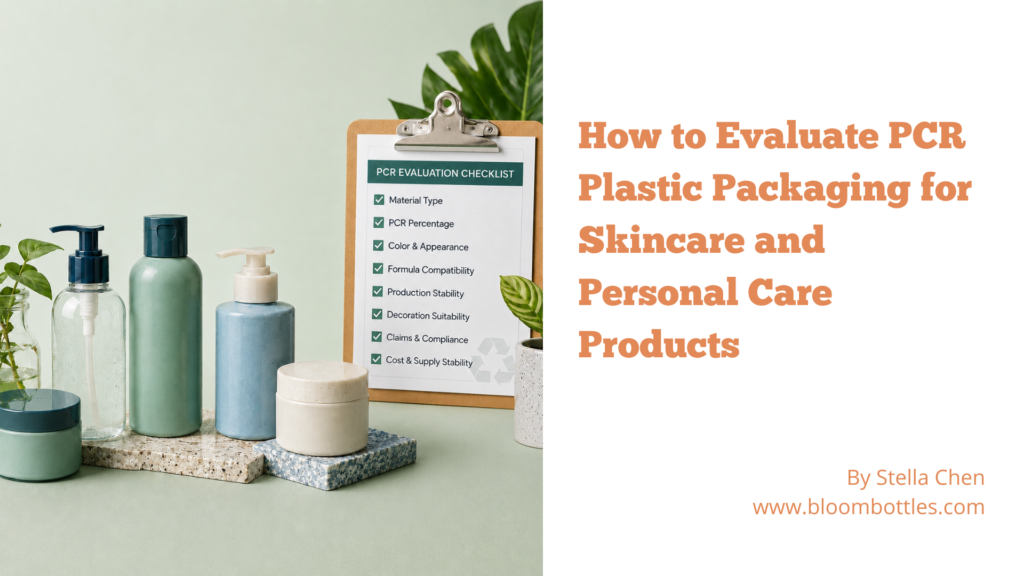
PCR plastic packaging is becoming a common option for skincare and personal care brands that want to improve their sustainability story. But using PCR is not only a material decision. It can affect color, cost, production stability, decoration, claims and repeat-order consistency.
For scale-stage brands and contract manufacturers, the key question is not simply whether PCR can be used. The better question is whether the selected PCR material, percentage and packaging structure can perform consistently in real production.
A PCR bottle may look acceptable in one sample. However, larger production can introduce more variables, including raw material shade, batch variation, molding stability, decoration results and customer claim requirements.
What PCR Plastic Packaging Means
PCR means post-consumer recycled material. In packaging, it usually refers to plastic material recovered after consumer use and processed into resin that can enter new packaging production.
For skincare and personal care packaging, common PCR options may include PCR PET and PCR HDPE. Some projects may also explore PCR PP, depending on the application, supply availability and technical requirements.
PCR does not automatically mean the package is fully sustainable, fully recyclable or suitable for every formula. Brands still need to evaluate the full packaging system, including material, closure, decoration, filling, shipping and marketing claims.
If your team is still comparing basic plastic options, our guide on PET vs HDPE vs PP skincare packaging can help clarify the starting point before choosing a PCR version.
Why PCR Packaging Needs Practical Evaluation
Many brands start with a simple goal: replace virgin plastic with PCR content. In real projects, the decision is usually more complex.
PCR material can influence appearance, processing, bottle strength, color consistency and decoration. It may also affect how the brand communicates environmental benefits on labels, websites and marketing materials.
This is why PCR packaging should not become a last-minute upgrade. It should be reviewed early, especially when the project involves custom colors, clear bottles, premium decoration, high order volume or long-term repeat orders.
Key Factors to Check Before Choosing PCR Plastic Packaging
1. Choose the Right Base Material First
PCR should follow the base material decision. If the product needs PET, then PCR PET may be the right direction. If the product needs HDPE, then PCR HDPE may be more suitable.
For example, PET is often used for clear or transparent bottles. HDPE is often used for squeezable bottles, haircare bottles, body care bottles and some personal care formats. PP is common for caps, closures and jars, but PCR PP availability and performance may vary by project.
The team should not choose PCR only because it supports a sustainability message. The base resin still needs to fit the formula, bottle structure, closure system and filling process.
2. Decide the Right PCR Percentage
PCR plastic packaging can use different PCR percentages. Common project discussions may include 20%, 30%, 50% or even higher PCR content, depending on the material and packaging format.
A higher PCR percentage may improve the sustainability story, but it can also bring more color variation, higher cost and more production control requirements. A lower percentage may offer a better balance between appearance, performance and cost.
For scale-stage brands, the best PCR percentage is not always the highest one. It is the percentage that the packaging can support consistently across production, filling, shipping and repeat orders.
3. Review Color and Transparency Expectations
Color is one of the first differences brands notice when evaluating PCR material.
PCR PET may look slightly gray, yellow or less clear than virgin PET, depending on the PCR source and content level. PCR HDPE may also show natural shade differences from batch to batch. These differences do not always affect function, but they can affect shelf appearance and brand consistency.
This matters more when the brand wants clear packaging, light colors, translucent effects or very tight color matching. In these cases, the team should review real material samples before confirming the final direction.
4. Check Formula and Product Compatibility
PCR material still needs to match the formula. Skincare and personal care formulas may contain fragrance, oils, alcohol, surfactants, actives or acidic ingredients. These ingredients can affect packaging performance over time.
Before choosing PCR plastic packaging, the project team should check whether the material is suitable for the formula type, filling condition and storage requirement. This is especially important for liquid products, oil-based formulas, products with strong fragrance or formulas that need long shelf stability.
If the packaging will use a pump, sprayer, cap, liner or plug, the team should also review the complete component system. Our article on choosing the right bottle and closure system for skincare packaging explains why components should not be evaluated separately.
5. Evaluate Molding and Production Stability
PCR material can behave differently from virgin resin during production. The supplier may need to check processing stability, bottle wall quality, color consistency, shrinkage, surface finish and defect risk.
A PCR sample may look fine in a small batch. Larger production can show more variation if the project does not control material source, processing parameters and approved reference samples carefully.
For this reason, PCR projects should include clear pre-production review. Brands should confirm the acceptable color range, surface appearance, functional requirements and production reference sample before placing larger orders.
This is closely related to how brands evaluate plastic packaging before you scale.
6. Review Decoration Compatibility
Decoration can look different on PCR material. Surface color, material shade and finish can affect silk screen printing, hot stamping, labels, spray coating and frosted effects.
For example, a light ink color may look different on PCR HDPE than on virgin HDPE. A transparent PCR PET bottle may influence how the formula color appears through the package. A label may cover color variation, while direct printing may make the bottle shade more visible.
Before confirming PCR packaging, brands should check decoration samples on the actual material, not only on a standard bottle or digital rendering.
7. Confirm PCR Claims Before Marketing Approval
PCR claims need careful wording. A brand should clearly state whether the recycled content applies to the bottle, jar, cap, full package or only one component.
If a package uses partial recycled content, the claim should normally show the percentage. For example, “Bottle made with 30% PCR PET” is clearer than a broad claim such as “eco-friendly packaging.”
For the U.S. market, the FTC provides guidance on recycled content and environmental marketing claims through its Environmental Claims: Summary of the Green Guides. Teams should review claim wording before final label or website approval.
Common Problems When Brands Switch to PCR Packaging
Color Looks Different From the Original Package
A brand may expect the PCR version to look the same as the virgin plastic version. In practice, PCR content can change the base shade of the bottle or jar. This is especially visible in clear, white, pastel or translucent packaging.
The PCR Percentage Creates Cost Pressure
Higher PCR content may increase material cost or reduce available supplier options. The team should compare different PCR percentages before choosing the final direction.
Decoration Does Not Look the Same
Ink, foil, label color or coating effects may look different on PCR packaging because the base material shade changes. Brands should review real decoration samples before approval.
Claims Are Too General
Claims such as “green,” “eco,” “sustainable” or “recycled packaging” may create confusion if they do not explain the actual PCR content or component. Clear claims reduce misunderstanding and support customer trust.
Repeat Orders Show Variation
PCR material can vary by source and batch. Without approved reference samples and production records, repeat orders may show visible differences in color, transparency or surface finish.
For brands planning long-term repeat production, our guide on packaging consistency across repeat orders explains how samples, records and production controls help reduce batch-to-batch variation.
How to Evaluate PCR Packaging Before Production
Start With the Formula and Package Function
The first question should be practical: what does the formula need from the package? A body wash, toner, lotion, body oil, scrub and sunscreen may not need the same material or structure.
Compare PCR Percentages With Real Samples
When possible, compare several PCR content levels with the same bottle shape. This helps the team understand color, transparency, cost and appearance trade-offs before final approval.
Confirm the Master Reference Sample
Before production, confirm which PCR sample will become the master reference. This sample should connect to the approved material, PCR percentage, color range, decoration and closure combination.
Test the Full Packaging System
Do not test PCR bottles, caps or decoration only as separate parts. Review the full system with the formula, closure, liner, decoration, filling process and shipping method.
If the team has already approved samples, the next step is still validation. Our article on why approved packaging samples still need testing before production explains this point in more detail.
Align Marketing Claims With Technical Reality
Marketing, packaging, sourcing and quality teams should align before approving PCR claims. The package should support the claim, and the claim should describe the package accurately.
A Practical PCR Packaging Decision Checklist
Before confirming PCR plastic packaging, teams can review these questions:
- Which base material does the formula need?
- Is PCR PET, PCR HDPE or another PCR option more suitable?
- What PCR percentage can the project support?
- Will the color or transparency meet brand expectations?
- Has the team tested the material with the actual formula?
- Does the closure system still perform correctly?
- Will decoration look stable on the actual PCR material?
- Can the supplier support repeat-order consistency?
- Does the marketing claim clearly state the PCR content and component?
- Has the team confirmed the master reference sample?
Final Thought
PCR plastic packaging can support a stronger sustainability direction for skincare and personal care brands. But it should not be treated as a simple material swap.
The right PCR decision depends on material type, PCR percentage, formula compatibility, color expectations, decoration, production stability and claim accuracy.
For scale-stage brands and contract manufacturers, reviewing these details before production can help reduce color surprises, testing delays, claim confusion and repeat-order instability.
FAQ
1. What is PCR plastic packaging?
PCR plastic packaging uses post-consumer recycled plastic material. In skincare and personal care packaging, common options may include PCR PET and PCR HDPE, depending on the product and packaging format.
2. Is higher PCR content always better?
Not always. Higher PCR content may improve the sustainability message, but it can also increase color variation, cost and production control requirements. The best percentage depends on the project’s appearance, performance and claim needs.
3. Can PCR packaging look exactly like virgin plastic packaging?
Sometimes it can look close, but teams should expect possible differences in color, transparency or surface appearance. Real samples are important before final approval.
4. What should brands check before using PCR plastic packaging?
Brands should check base material, PCR percentage, formula compatibility, color range, decoration performance, closure matching, production stability, repeat-order consistency and claim wording.