
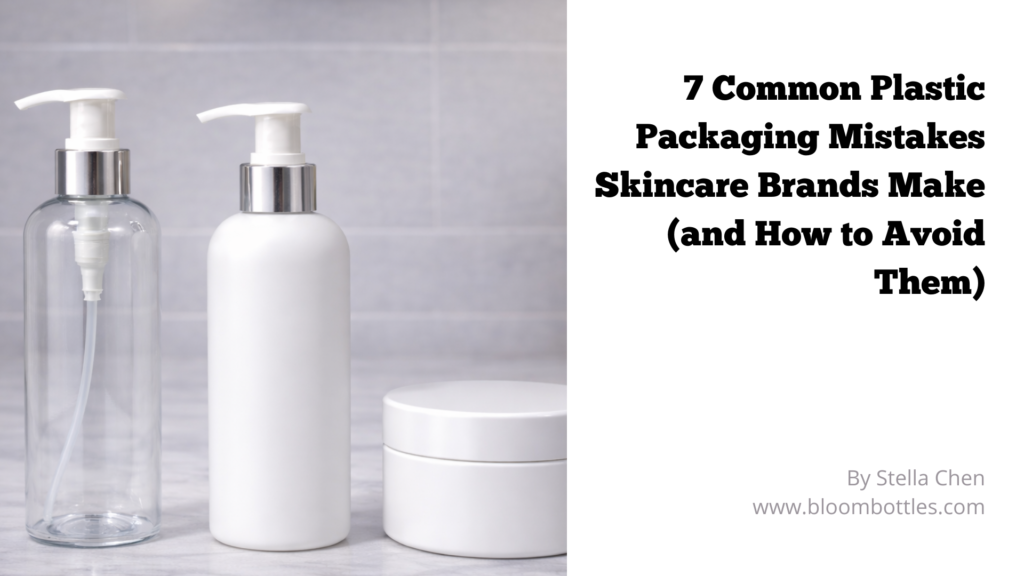
When skincare and personal care brands scale production, packaging problems often appear unexpectedly — leakage during shipping, inconsistent dispensing, or rising operational costs.
In most cases, these issues are not caused by logistics or manufacturing quality.
They originate from early packaging decisions made during product development.
Below are seven common plastic packaging mistakes and how to avoid them before they become expensive problems.
Mistake #1: Choosing Cosmetic Packaging Based Only on Appearance
Visual references are important, but packaging performance matters more.
A bottle that looks premium on the shelf may:
- collapse when squeezed
- crack during transport
- perform poorly on automated filling lines
How to avoid it
Evaluate packaging based on formula viscosity, usage environment, and filling conditions — not just aesthetics. Appearance should be the final filter, not the first.
Mistake #2: Using the Wrong Plastic Material for Skincare Formulas
Not all plastic materials behave the same with different formulations.
For example:
- thin toners often work well in PET bottles
- shampoos and lotions usually perform better in PE / HDPE bottles
How to avoid it
Match the bottle material to chemical resistance, squeeze behavior, and user experience before confirming final tooling.
Mistake #3: Ignoring Bottle and Closure Compatibility
Many leakage issues are not caused by the bottle — but by incompatible closures.
Common problems include:
- pump output mismatched to formula viscosity
- cap threads not fully compatible with the bottle neck
- missing liners or sealing solutions for shipping
How to avoid it
Always test bottles together with the final pump or cap system under real transport conditions.
Mistake #4: Not Considering Filling Line Requirements
Packaging that works for hand filling may fail in automated production.
Issues often appear when:
- wall thickness varies
- bottle rigidity is inconsistent
- tolerances are too tight for high-speed filling
How to avoid it
Confirm filling methods early and validate packaging designs through functional sampling, not just visual approval.
Mistake #5: Prioritizing MOQ Instead of Supply Stability
MOQ-focused decisions often work for early launches — but break down when volumes grow.
Brands then face:
- inconsistent batch quality
- higher logistics costs
- limited flexibility during demand fluctuations
How to avoid it
Plan packaging using long-term volume stability rather than short-term unit price.
Mistake #6: Switching to PCR Packaging Too Late
PCR plastic packaging cannot simply replace virgin plastic at the final stage.
Unexpected issues include:
- color variation between batches
- mechanical property differences
- longer material lead times
How to avoid it
Integrate sustainability decisions during the packaging development stage, not after commercialization.
Mistake #7: Changing Packaging Near Production Stage
Late packaging adjustments often cause:
- production delays
- emergency sourcing
- cost increases
How to avoid it
Develop packaging in parallel with formulation and allow sufficient time for validation testing.
Final Thought
Most packaging failures are predictable.
They result from small early assumptions rather than major manufacturing errors.
If you are still evaluating packaging structure and material selection, you may also want to review how packaging should be chosen in the first place.
Many of these mistakes originate from incorrect initial selection criteria rather than manufacturing execution.
FAQ: Plastic Packaging Mistakes in Skincare
What is the most common plastic packaging mistake skincare brands make?
Choosing packaging based on appearance alone is the most common mistake. Performance, compatibility, and scalability matter more once production volumes increase.
How can I reduce leakage in cosmetic packaging?
Ensure compatibility between bottle, closure, and formula. Testing with the final pump or cap — and adding liners or seals when needed — greatly reduces leakage risk.
Is PET or HDPE better for skincare bottles?
Neither is universally better. PET works well for transparent, low-viscosity products, while HDPE is often preferred for lotions and shampoos due to durability and squeeze performance.
How early should packaging be decided during product development?
Packaging decisions should ideally be confirmed alongside formulation development. Late packaging selection often leads to compatibility issues, delays, and additional testing costs.